Unfortunately, death is inevitable. Although we all have to eventually leave this world, is there life after death? This is a question that virtually every human being has pondered. Throughout human history, there have been many different predictions and claims about what the afterlife is like.
Certainly, many religions claim they actually know exactly what is going do happen after you die. According to some estimates, there are approximately 4,200 religions in the world. Do you believe that one holds the one true belief? Of course, they cannot all be right, but they can all be wrong.
Various Versions Of The Afterlife
In the following section, we will discuss some of the most well-known versions of the afterlife. For each version, we will describe what the afterlife entails, and for most, we will share interesting studies on those who believe. We will also talk about what the skeptics have to say about them.
Heaven And Hell
Of course, most scientists think that humans are the only species that knows they are going to eventually die. According to a interesting CBS News poll, three in four Americans believe in the existence of heaven or hell. So you can surely say that most Americans believe in an afterlife.
Heaven
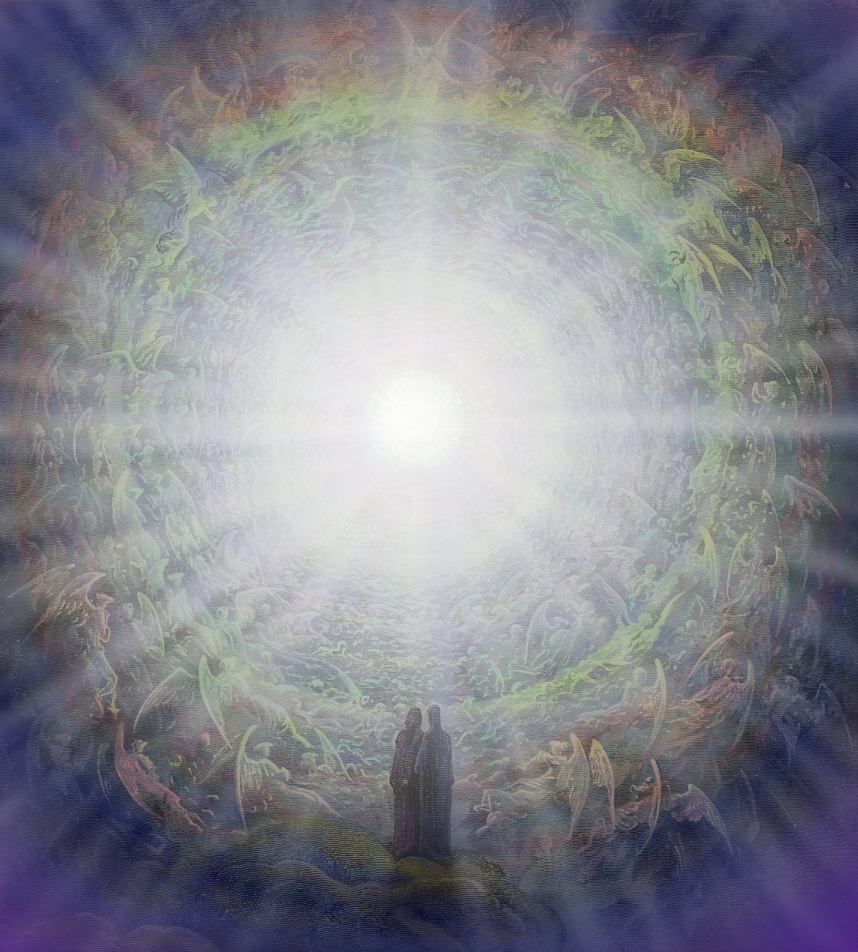 Heaven is a often described as a beautiful Paradise where heavenly beings (such as gods and angels) reside. The place is common in various religions, and is often believed to be the destination of the blessed after death. Heaven is often traditionally depicted as being located above the sky.
Hell
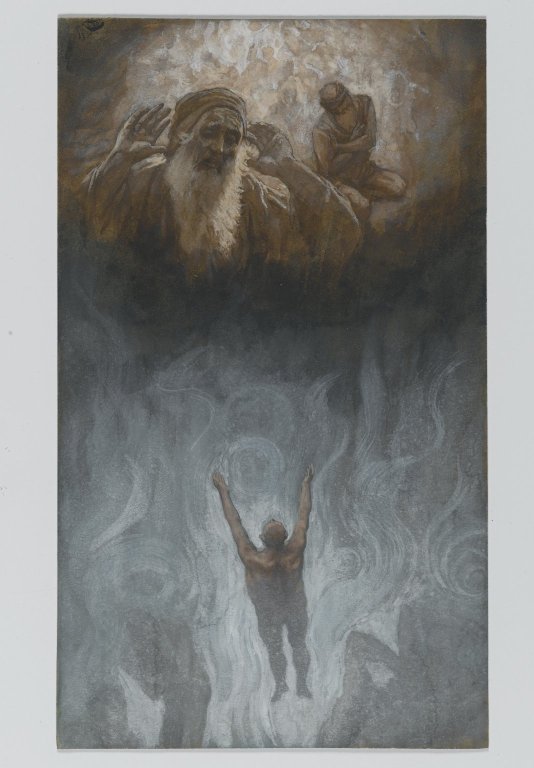
A depiction of a rich man in hell. He is asking Abraham and Lazarus (in heaven) for help.
The opposite of heaven, is a place called “Hell“. The belief is held in many religious traditions (including folklore and mythological). In most Abrahamic traditions, it is viewed as a spiritual realm of eternal punishment and suffering for the wicked after death. It is often portrayed as a place populated with demons who torture souls. Most hells are ruled by a death deity such as the Devil.
Some religions depict hell as an eternal destination. However, others (such as religions that hold a belief in reincarnation) depict this evil location as an intermediary period between incarnations.
Purgatory
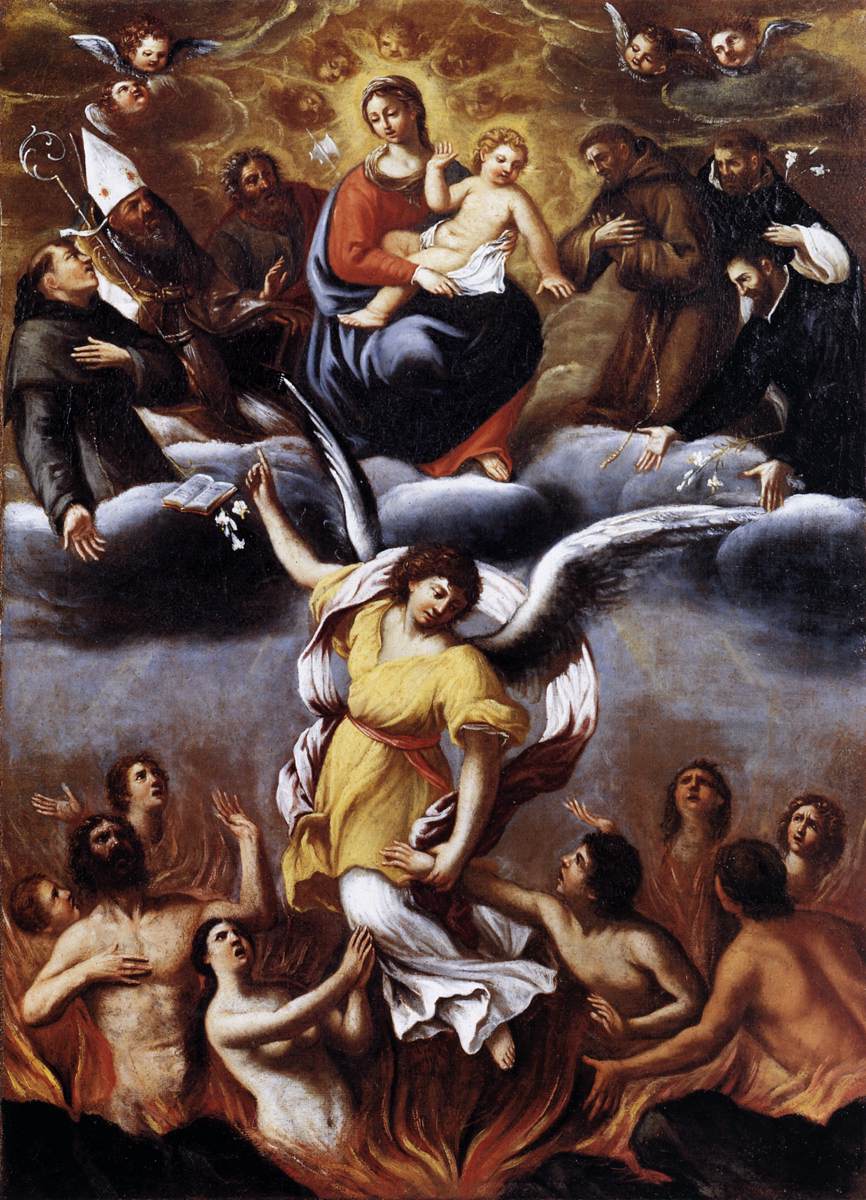 According to Roman Catholic doctrine, Purgatory is a temporary place or state of suffering after physical death. It is inhabited by the spirits of sinners who are there to pay for their sins before going to heaven. If one ends up in Purgatory, their only future destination is heaven, never hell.
Near-Death Experiences
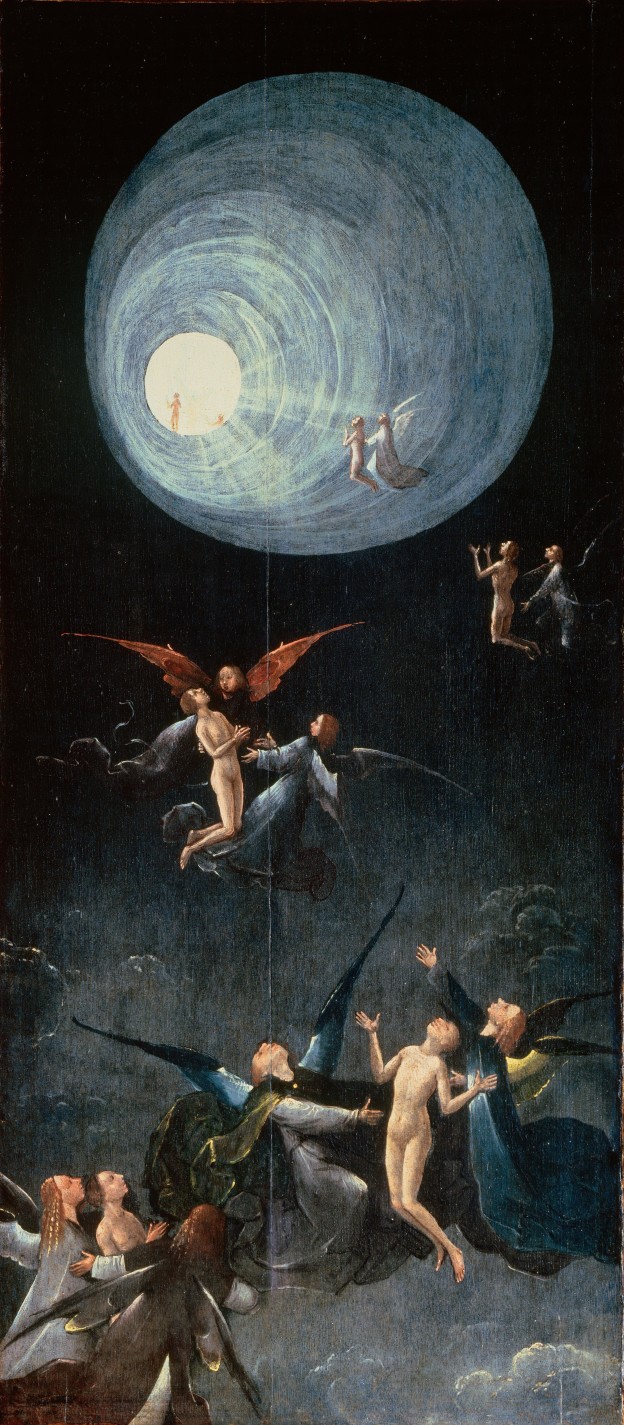
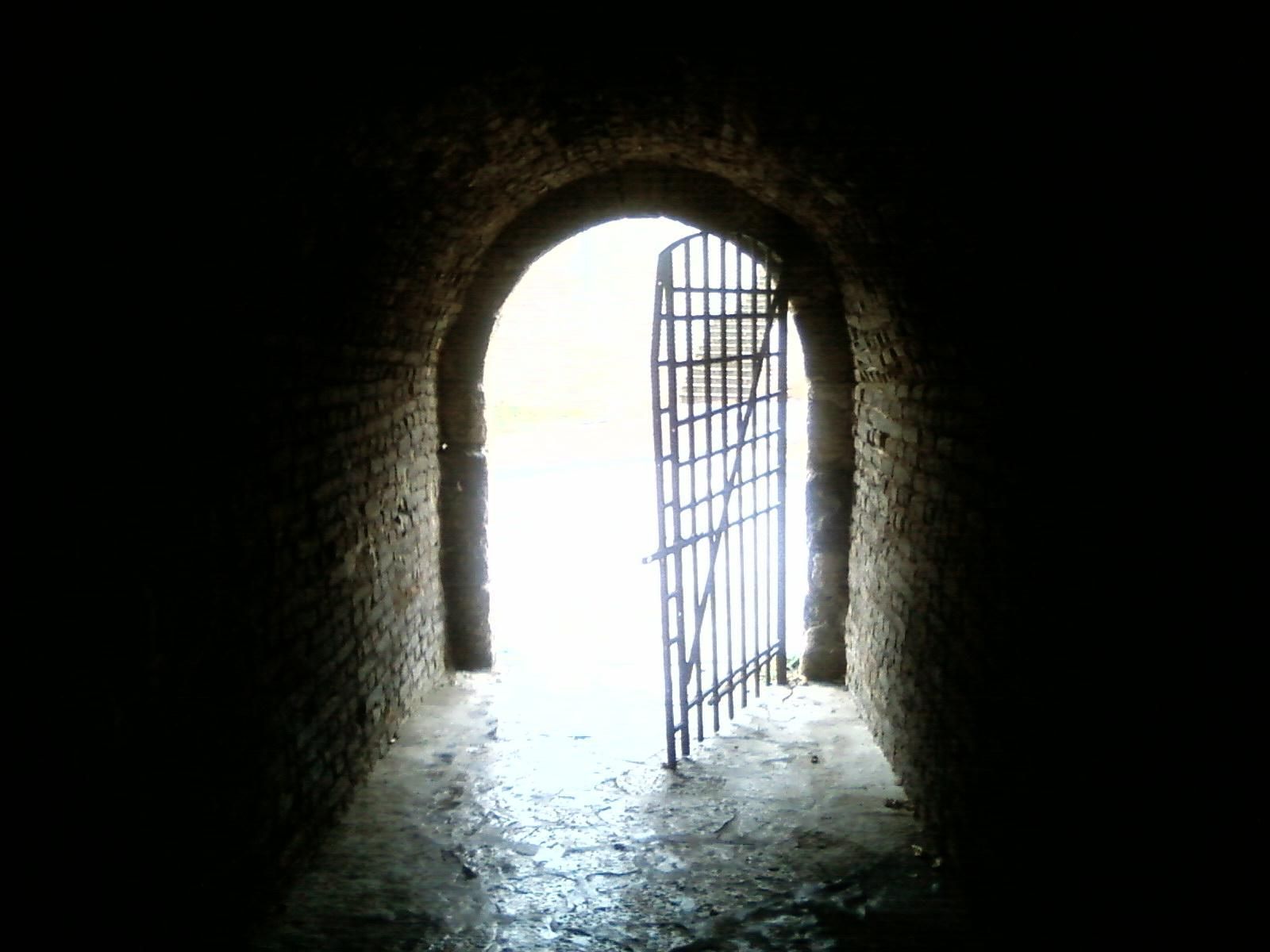 A near-death experience (NDE) is a personal experience that takes place when a one is close to death. Many people report having an out-of-body experience, an awareness of being dead, and seeing a bright light. Some other common traits of a NDE include a sense of peace, an intense feeling of unconditional love, positive emotions, and even reuniting with deceased loved ones.
Although the majority of near-death experiences are usually positive, some can be frightening. Some people report having a terrible experience. For example, there have been claims of visiting dark and very depressing areas where creepy beings (such as demons and leprechauns) reside.
Not all negative NDE accounts are reported by people with a religious background.
Near-Death Experience Study Reveals Stunning Find
Amazingly, according to the largest ever medical study into near-death and out-of-body experiences, some awareness may continue even after the brain has shut down completely.
For 4 years, scientists at the University of Southampton have examined over 2,000 people who suffered cardiac arrests. The studies took place at 15 hospitals in the UK, US and Austria. Close to 40 percent of survivors had described some kind of awareness while being resuscitated.
What is significant about this particular study is that conscious awareness continued for up to three minutes into the period when the heart wasn’t even beating. The brain typically shuts down within 20-30 seconds after the heart has stopped. The study provides some good evidence that these experiences are happening even after being medically dead. Research psychologist Dr David Wilde hopes that there will be future studies to determine what actually happens when you die.
The medical study into near-death and out-of-body experiences may have given a lot of people some more hope that there really is an afterlife. Although this amazing find does not prove there is life after death, it appears to have proven that consciousness can survive after death, at least temporarily.
The Skeptics On Near-Death Experiences
Skeptics believe NDEs are not proof of an afterlife. Below are some reasons for their argument.
1. People that have an NDE are not actually dead. Of course, this is why they are called near-death experiences.
2. NDEs of people who are clinically dead are just psychopathological symptoms that are caused by a severe malfunction of the brain, which is the result of the cessation of cerebral blood circulation.
3. Seeing a tunnel or lights is likely caused by damage to the bilateral occipital cortex and the optic radiation.
4. Some medications can produce all the features of a near-death experience.
Skeptics often say that since there is currently no explanation for near-death experiences, people will turn to supernatural explanations to fill the void. Are NDEs just hallucinations, or proof of an afterlife?
A Medication That Can Reproduce All The Features Of A NDE
 Dr. Karl L. R. Jansen is an expert on ketamine (a medication that is mostly used for starting and maintaining anesthesia). His thorough research has proven that ketamine by intravenous injection (in appropriate dosage) can actually reproduce all the features of a near-death experience.
What About The “21 Grams” Theory?
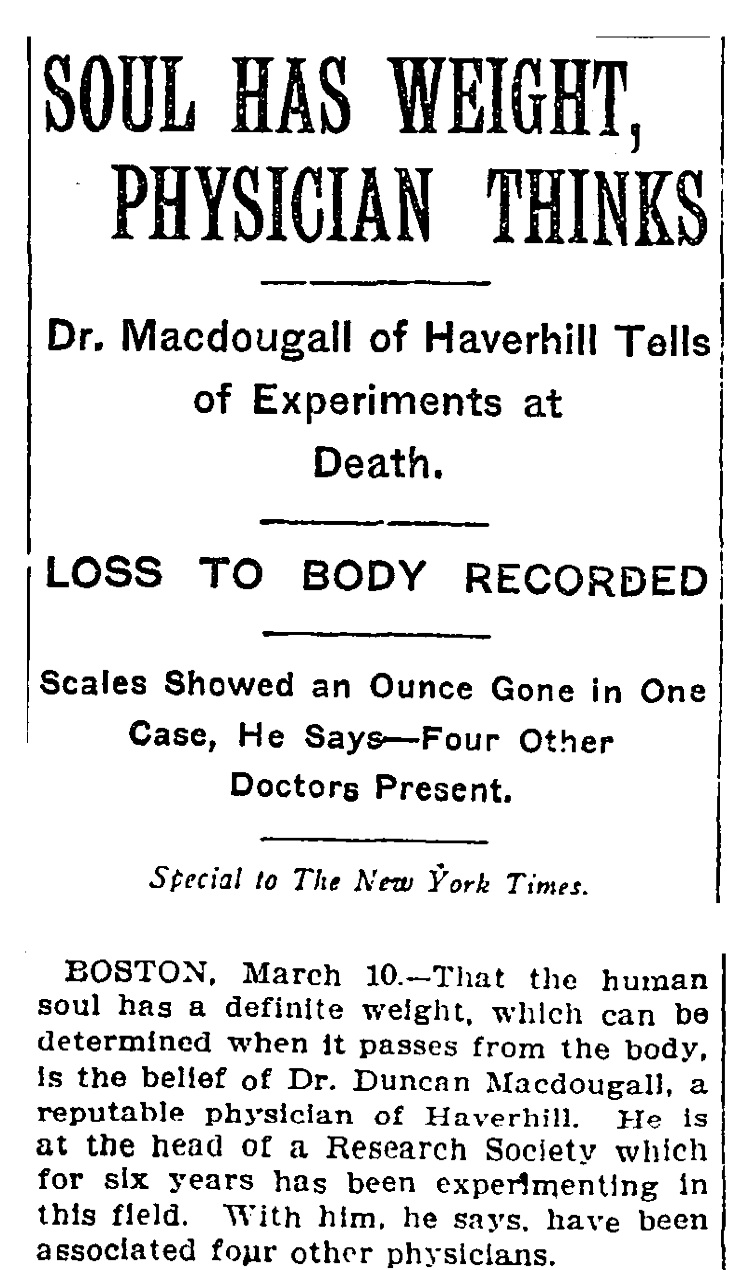 You may have been told that the soul has a weight of 21 grams. In the early 1900s, Dr. Duncan “Om” MacDougall (1866 – October 15, 1920) weighed six people while they were in the process of dying. His goal was to measure the mass that was lost when the so-called “human soul” departed the body at death. The first patient was said to have lost 21 grams at the time of death. The other five cases varied in the amount of mass loss. Does the loss of mass prove humans have souls?
MacDougall also measured 15 dogs (similarly). However, unlike the humans, there was no change in the mass of the dogs. Based on the results, MacDougall concluded that dogs do not have souls.
The Criticism Of Dr. MacDougall’s Experiment
Although Dr. MacDougall thought he had made an amazing discovery, he received plenty of skepticism. Researchers said his experiment was full of flaws. For instance, there were only a small sample size of subjects, including a lack of adequate control over the experimental conditions.
According to physicist Robert L. Park (an emeritus professor of physics), MacDougall’s experiments have no scientific merit. Even if his findings were found to be accurate, it doesn’t prove that humans have a spirit. If a spirit is supposed to be nonphysical, how could it have weight?
Reincarnation
 Reincarnation is the belief that the soul (can be human or animal) will begin a new life in a new body (human or animal) after death. Although reincarnation is certainly a central tenet of the Hindu religion, it is also a common belief of various ancient and even modern religions (such as Spiritism), as well as many tribal societies around the world (in places such as West Africa and Australia).
The Skeptics On Reincarnation
Ian Pretyman Stevenson (October 31, 1918 – February 8, 2007) was a U.S. psychiatrist. Over a long period of 40 years, he investigated many reports (with over 2,500 case studies) of children who claimed to actually remember a past life. Stevenson believed there was no “normal” explanation for the memories of the children. Of course, skeptics have also analyzed many of these reports.
Austrian-American moral philosopher Paul Edwards (September 2, 1923 – December 9, 2004) said the reports were anecdotal. He argued that claims of evidence for reincarnation originate from selective thinking, and not from a previous life. Edwards also suggested that the claims originate from false memories that will often result from one’s basic fears, or their own belief system. The argument makes sense because the majority of Stevenson’s reported cases of reincarnation had originated in Eastern societies (which is where many hold the religious belief in reincarnation).
There are other objections to reincarnation claims. One is because most people do not recall previous lives. Also, it’s scientifically impossible for a personality to survive death and travel to another body.
The Belief That When You Die, You Become A Ghost
 Interestingly, the concept of ghosts goes back to ancient Egyptian culture (in the sense of the continued existence of the soul and spirit after death). According to a HuffPost/YouGov poll, 45 percent of Americans believe in ghosts, or that spirits of people who have died can come back in certain places and situations. This is a very high percentage. Do the poll results surprise you?
There have been many claims of ghost sightings from people around the world. Are they all just lying? Of course not. However, even when people are sincere with their claims, of course, further research is required to determine if what they are seeing is actually ghosts. Based on research in anomalistic psychology (the study of human behavior and experience connected to the paranormal, with the assumption that there is nothing paranormal involved), seeing ghosts may arise from hypnagogic (the experience of the transitional state from wakefulness to sleep) hallucinations.
The Skeptics On Ghosts
So what do the skeptics have to say about ghosts sightings? They don’t believe they are actual ghosts. This is simply because they say there is no real evidence to support the extraordinary claim. They believe that ghost sightings are no more than simply the result of optical illusions.
A Study On Alleged Ghost Hauntings
A study (found on Wikipedia) of two experiments was conducted to determine if alleged hauntings were real. The conclusion was that the so-called “haunted” areas where people often report some very unusual experiences is all due to environmental factors (this may differ across locations). For example, some of the factors include the variance of local magnetic fields, the size of location, and lighting level stimuli of which witnesses may not be consciously aware. So the alleged hauntings may be no more than the result of people just responding to ‘normal factors’ in their surroundings.
Carbon Monoxide Poisoning: The Explanation Of Haunted Houses?
As early as 1921, carbon monoxide poisoning was thought to be an explanation for haunted houses. This is because the poisoning can cause changes in perception of the visual and auditory systems.
The Belief That There Is No Afterlife
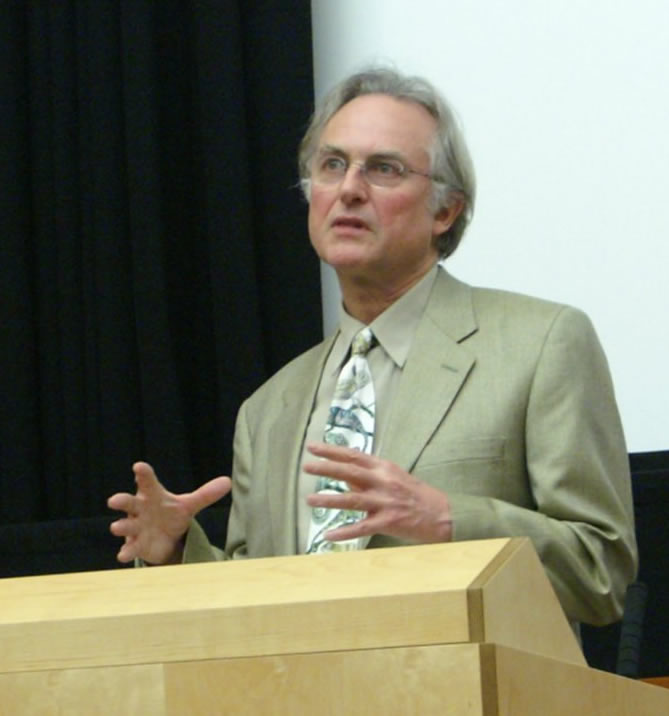 Richard Dawkins is a English ethologist, an evolutionary biologist, a writer of several best-selling books, and an outspoken atheist. He believes that once the brain stops functioning, consciousness ceases to exist. Dawkins often states that the belief in an afterlife is just wishful thinking.
Why Dawkins Believes Death Is The End
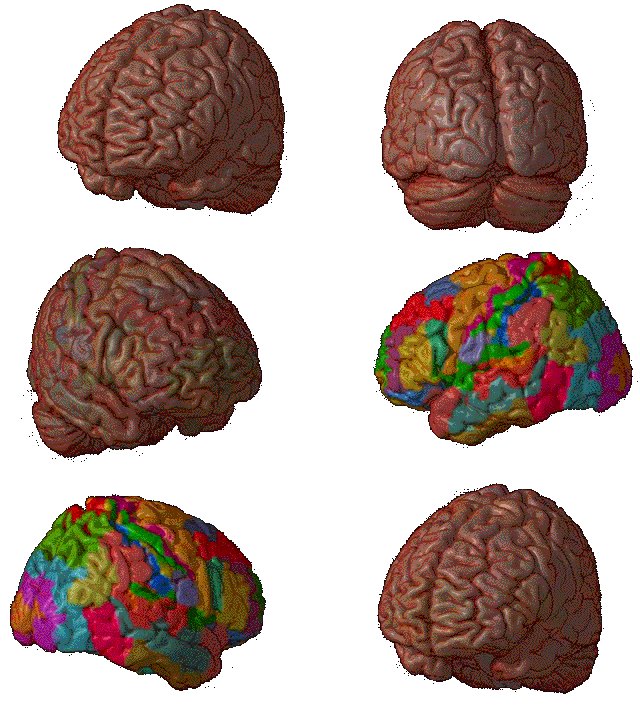 To argue his position, Dawkins says consciousness is a product of, and also dependent on, the brain (which is the dominant view from mainstream neuroscience). After death occurs, the brain no longer functions. Therefore, consciousness will fail to survive brain death, and ceases to exist.
Not All Atheists Lack The Belief In An Afterlife
In a narrower sense, the term “atheism” is defined as the lack of a belief in the existence of deities. However, when it comes to the belief in an afterlife, Richard Dawkins cannot speak for all atheists.
According to TheSkepticsGuide.org, in 2014, a survey was compiled by The Austin Institute for the Study of Family and Culture (AISFC). The study revealed that 32 percent of Americans who identified themselves as agnostics and atheists believe in an afterlife of some kind. There was a total of 15,738 Americans who participated. The participants were between the ages of 18 and 60.
Are The Cosmos All There Is?
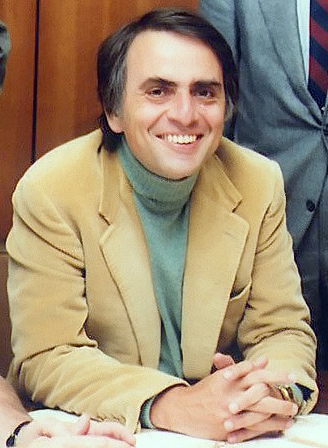 In the 1980s, the famous Scientist Carl Sagan (November 9, 1934 – December 20, 1996) said: “The cosmos is all there is, or was, or ever will be.” This is a statement that had scared a lot of people.
While many believe life was created by a god (or gods) for a special purpose, some think the exact opposite. There are even some people who think we may be living in the Matrix. No matter what one believes, the world would be a better place if more people would respect all types of beliefs.
Conclusion
As long as humans exist, there will be investigations for the possibility of an afterlife. Luckily, there are scientists who are very determined to find the answer to one of life’s biggest mysteries. For thousands of years, religion has helped give many people a lot comfort with the belief that there really is another life somehow. Do you think humans invented religions simply for the purpose of making more sense of the world, and lessening the fear of death? This could very well be the case.
Virtually everyone wants there to be a life after death. They want to live forever and see all of their deceased loved ones again. Of course, most people do not want to believe that after you die, you are dead, and there is nothing else. This concept is rather frightening to many. However, even if you are unsure if there is an afterlife, doesn’t it make perfect sense to make the most out of the life you know you have? Life is so precious, and we should all enjoy every single day like its our last.
After reading various studies and claims regarding an afterlife, now it is time to hear your take. Is there life after death? Share your own beliefs on this question we all want to know the answer to.